
Ceramic paint sealant: Get a free quote
Ceramic paint sealant – ceramic coating
Do you want the ultimate protection for the paint on your car? Then you should get a ceramic paint sealant, also known as ceramic coating. This is an advanced surface treatment that provides a hard, glass-like film over the paint.
The result is an extreme shine, lasting protection against scratches, UV rays and chemicals, as well as a dirt- and water-repellent effect that makes the car easier to keep clean.
We can provide you with a free, no-obligation quote from a dealer in your area.
Get a free quote for ceramic coating
Send us a short description of your wishes and needs, and we’ll help you find the best suited car care professional for your car.
Your contact information will only be used in connection with the request. Your personal data will not be disclosed to unauthorized persons.
What does ceramic paint sealing cost?
The price of ceramic paint sealing depends on the size of the car, choice of product and provider. Expect to pay from around NOK 7,000 and upwards for a regular car, and from NOK 10,000 and upwards for a large SUV.
This may seem like a high price but remember that a ceramic coating is a semi-permanent treatment that lasts for several years with proper maintenance. Based on the potential durability of ceramic paint sealing, the annual cost is often lower than traditional polishing and waxing.
Most providers have different packages to choose from, ranging from a simple single-layer coating to more advanced multi-layer systems. The price difference reflects both thickness, durability and gloss level. If you drive a lot in tough conditions and expect a lot of wear and tear, going for a premium treatment may be money well invested.
What affects the price of ceramic paint sealing?
There are three main factors that determine the price of a ceramic paint sealant:
- The size of the car: The larger the surface to be treated, the higher the price. A compact car is less expensive to coat than a large SUV.
- The condition of the paint: If the paintwork is worn or scratched, it will need to be corrected with polishing before the paint sealant can be applied. This is time-consuming work that is added on top of the price.
- Choice of product and provider: Different suppliers use different products, from affordable coatings to expensive premium products. If you choose a reputable supplier with long experience and good feedback, the price may be higher than a newcomer to the industry.
What is ceramic coating, or paint sealing?
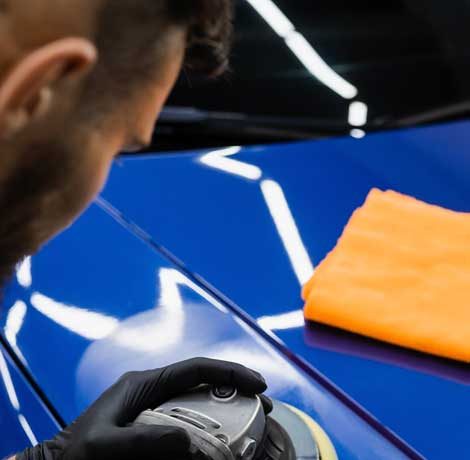
Ceramic coating/paint sealing is an advanced form of paint protection based on nanotechnology. The treatment involves applying a thin layer of liquid glass chemicals to the paint surface, where it hardens into a hard, crystal clear film with protective properties.
This film is considerably harder and more durable than traditional paint protections such as wax or conventional sealants. The coating layer is very thin, yet strong enough to protect against minor scratches, chemicals and fading from UV rays.
In addition, the coating creates a glass-like, hydrophobic surface that actively repels water, dirt and pollution. This keeps the car looking cleaner for longer and makes it easier to wash when dirt settles.
The effect of a ceramic paint seal is noticeable both visually and tactilely. The surface becomes silky smooth to the touch, with a deep, wet shine that really makes the paint pop. Depending on the product and the number of layers, the protection can be effective for anywhere from 2 to 5 years or more.
Is ceramic paint sealing worth it?
Whether ceramic paint sealing is worth the price is an assessment each car owner must make based on their own needs and finances. For some, it will definitely be worth the investment, while others will be able to achieve satisfactory protection with less expensive alternatives such as wax or conventional sealing.
The arguments for ceramic coating are many. The treatment gives an extreme gloss and depth to the paint that lasts for up to several years. The hard surface provides good protection against small scratches and stone chips, and the dirt- and water-repellent layer makes the car easier to wash and keep clean.
For those willing to invest time and money in the ultimate paint protection, ceramic coating is arguably the best thing you can do for your car. If you have an expensive car and want to keep it for a long time or just enjoy the feeling of immaculate paintwork, it will be money well spent.
How long does ceramic paint sealant last?
The lifespan of a ceramic paint sealant varies depending on the product, the quality of the application and not least how you maintain the car afterwards. Most coatings have an estimated shelf life of between 2 and 5 years, provided the car is properly maintained.
Simpler products tend to be at the lower end of the scale, with an expected life of 2-3 years. More advanced multi-layer coating systems, e.g. with an additional layer of SiO2, can last 5 years or more under optimal conditions.
However, it is important to point out that a ceramic coating gradually degrades over time, even though it is technically still on the paint. After a couple of years, you will often see a reduction in gloss and dirt repellency. To maintain maximum performance throughout its lifetime, regular maintenance and the use of specially adapted products when washing is required.
Factors that reduce durability are frequent driving in demanding conditions, such as winter driving with a lot of salt, or driving in areas with a lot of pollution and acid rain. Excessive use of pressure washers, aggressive chemicals or harmful washing methods will also have a negative impact on the coating.
What is the best paint sealant?
There are many different ceramic paint sealants on the market, and which one is “best” is both subjective and dependent on individual needs and preferences. The most well-known products have proven performance over time.
Some examples of good paint seals:
- Gtechniq: British coating in the top tier, with a hardness of 9H. Crystal Serum Ultra is used by many Norwegian professional suppliers and provides an extreme gloss and protection that few can beat. Comes with a 5-9 year warranty depending on the number of layers.
- Nxtzen Nxtzen: Nxtzen X, Nxtzen XL and the top model Nxtzen Z. The latter provides extreme gloss, hardness and durability for up to 8 years. Nxtzen has quickly become a favorite among Norwegian car care professionals.
- Drop Off: Swedish coating system that has built up a solid position in the Norwegian market. Drop Off is available in several variants, including a ceramic coating for home use (Drop Off Home) and a 3-layer professional coating applied by certified detailers (Drop Off PRO). The latter is said to be highly durable and have a lifespan of up to 5 years.
- Ditec Ceramic: The Ceramic range consists of easy-to-apply spray coatings for both professional and private use. Ditec Ceramic Pro and Max provide 2 and 3 years of protection respectively, while the top model Ceramic Ultra is said to be durable for up to 5 years. Ditec has dealers all over the country.
How to wash a car with ceramic paint sealant?
A car with a ceramic paint seal has special requirements for maintenance and cleaning. The wrong washing method or products can impair the performance and durability of the coating.
The good news is that coating makes the cleaning job easier. Thanks to its dirt- and water-repellent surface, most dirt will bounce off with a quick rinse. So, your car stays clean and tidy for longer between main washes.
When it’s time to wash, follow these steps:
- Foam wash as a pre-wash: The pre-wash is an important phase for a gentle and effective car wash. The aim is to remove loose particles and dirt before the main wash, without scratching or damaging the coating. If you wash your car regularly, a simple foam wash as a pre-wash will be sufficient for much of the year.
- Cleaning the rims: The next step is to take care of the rims. This is where a lot of stubborn brake dust and dirt accumulates and requires a little extra effort. Spray the rims with a suitable rim cleaner and let it work for a few minutes before rinsing it off with clean water.
- Degreasing: After a thorough pre-wash, it’s time for the main wash. Start by degreasing, preferably in the lower part of the car body where the dirt accumulates the most. Leave the degreasing to work for a few minutes, but do not let it dry completely. Degreasing is a strong chemical that must be rinsed off thoroughly. You can then hose the car with a pressure washer. Start at the bottom of the car and work your way up.
- Fine wash: After degreasing, you can move on to a fine wash with a mild, pH-neutral shampoo specially developed for coated cars. Mix the shampoo in a bucket of lukewarm water. Wash one part of the car at a time with a soft microfiber sponge. Start at the top where there is the least dirt and work your way down. Rinse the sponge often in clean water to avoid rubbing dirt against the paint. When you’re done with the fine wash, you can go over it again with a pressure washer.
- Dry the car properly: This is important both to avoid watermarks and scratches in the coating. Use a soft microfiber towel or chamois to wipe off excess water. Start at the ceiling and work your way down. Turn the towel often and change it to a new and dry one when it gets wet. Synthetic chamois is the gentlest choice.
What is the difference between wax and coating?
Both wax and ceramic coating aim to protect the paint, but there are several key differences between the two methods:
- Durability: A ceramic coating typically lasts 2-5 years, while wax lasts 1-3 months before it needs to be renewed.
- Protection: A coating provides a much harder and more durable surface than wax, and protects against scratches, chemicals and UV rays.
- Appearance: Both offer increased gloss, but a coating often gives a more extreme, glassy finish. A waxed car tends to have a warmer, softer glow.
- Water repellency: Fresh wax has a good water-repellent effect, but this gradually deteriorates. The coating is extremely hydrophobic, and water bounces off easily, year after year.
- Application: Waxing is something most people can do themselves, while coating requires thorough paint preparation and precision application with advanced equipment.
- Maintenance: A waxed car requires frequent renewal to maintain its protection. A coated car stays good for longer but requires specialized maintenance.
- Cost: Waxing can be an affordable do-it-yourself job, while a proper ceramic treatment can cost NOK 10,000 or more.
How do I remove a ceramic coating?
Removing a ceramic coating requires stronger means than most people have access to at home. Depending on the type of coating and its condition, intensive polishing with abrasives or chemical removal with special solvents may be required.
In most cases, it is recommended to leave coating removal to a professional. They have the equipment and expertise to remove the coating without damaging the paint underneath. In the worst case, the wrong procedure can result in permanent scratches or dullness in the paint.
If you need to remove a ceramic coating, make sure you choose a provider with proven experience in the field. Ask to see examples of previous work and ask questions about the methods and products to be used. A reputable company will be able to give you a detailed description of the process and expectations.
Once the coating has begun to peel, it may also be a good idea to consider whether it’s worth the effort to remove it. Unless the surface is uneven or stained, the best option may be to polish away the top layer and apply a new coating over it. This saves both time and money versus full removal.
How can I get a quote for ceramic paint sealing?
Which paint sealant is best for your car? Who delivers the best quality? Which company uses the most experienced professionals for the job? These are all important questions, and we know it can be time-consuming to research all the coating companies in your area.
If you want to save time in the process, we can help you. Fill in the form on our site with some information about the job, and we’ll forward your enquiry to the operator near you who can best meet your expectations and needs.
We collaborate with skilled operators all over the country who have extensive experience of ceramic paint sealing and who can give you the result and protection you want for your car. Our service is free and completely non-binding.